Simple Routines That Reduce Risk for Everyone
Keeping a home safe and comfortable often comes down to small, consistent habits. When it comes to infection control, this is especially true. Simple routines — done regularly and without stress — can help protect everyone in the household, particularly older loved ones or those recovering from illness.
Infection control at home does not need to feel complicated or clinical. With a thoughtful approach, it can become a natural part of everyday life.
Why Infection Control Matters at Home
Many people associate infection control with hospitals or medical settings. In reality, the home environment plays an equally important role — especially when someone is more vulnerable to illness.
Older adults, those with existing health conditions, or individuals recovering after surgery may have a lower resistance to infection. Small exposures that would normally be manageable can sometimes have a greater impact.
This doesn’t mean living in fear. It simply means being mindful of the small routines that support a healthier environment.
Hand Hygiene: The Simplest and Most Effective Habit
One of the most effective ways to reduce the spread of infection is also one of the simplest.
Regular handwashing:
- Before preparing or eating food
- After using the bathroom
- After returning home from outside
- After assisting with personal care
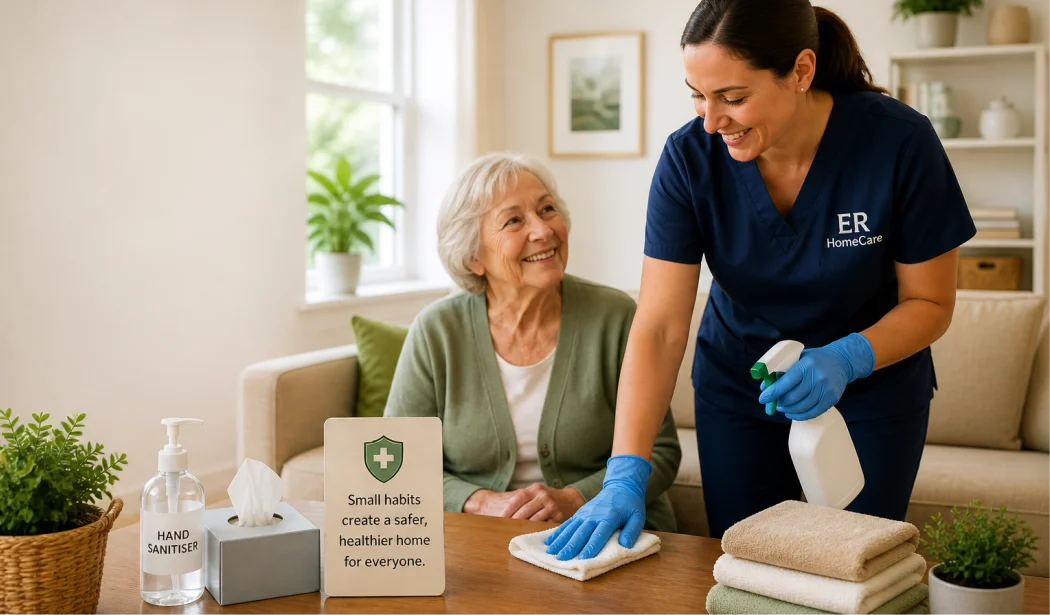
Using soap and water, or hand sanitiser when needed, helps reduce the transfer of germs throughout the home.
Consistency matters more than perfection.
Keeping Surfaces Clean and Tidy
Frequently touched surfaces can easily carry germs from one place to another.
Simple habits such as:
- Wiping down kitchen counters and tables daily
- Cleaning door handles, light switches, and remote controls
- Keeping shared spaces tidy and uncluttered
can reduce the likelihood of germs spreading between household members.
This doesn’t require constant cleaning — just regular attention to key areas.
Managing Laundry and Personal Items
Clothing, towels, and bedding can also carry bacteria, particularly when someone is unwell.
It may help to:
- Wash laundry regularly, especially items used daily
- Avoid sharing personal items such as towels or face cloths
- Keep clean and used items separate
These small steps help maintain hygiene without adding unnecessary pressure.
Supporting a Healthy Environment
Fresh air and a comfortable living space play an important role in overall wellbeing.
Opening windows when possible, allowing airflow through the home, and keeping rooms clean and well-organised can support both physical health and comfort.
A calm environment often encourages better habits naturally.
Being Mindful When Someone Is Unwell
If a family member is recovering from illness or surgery, a few additional precautions can help protect both them and others in the home.
This may include:
- Limiting close contact when someone is unwell
- Using tissues and disposing of them promptly
- Encouraging rest and hydration
- Keeping commonly used areas clean
The goal is not isolation, but gentle awareness.
Consistency Over Perfection
Infection control at home is not about strict rules or constant vigilance. It is about building small, consistent habits that become part of daily life.
Over time, these routines create a safer, more supportive environment for everyone — without disrupting the comfort of home.
When Extra Support Can Help
For some families, maintaining these routines consistently can become difficult — especially when caring for an older loved one or someone recovering at home.
Professional in-home care can assist with:
- Maintaining hygiene routines
- Supporting personal care safely
- Monitoring health and wellbeing
- Providing reassurance and consistency
Support doesn’t replace what families do. It helps sustain it.
A Steady Approach to Everyday Care
A safe home does not need to feel clinical or restrictive. With simple routines and a calm approach, infection control can become a natural part of caring for one another.
Small actions, repeated over time, often make the biggest difference.
Need Support at Home?
If you’d like assistance maintaining a safe and supportive home environment for a loved one, our team is here to help — calmly and without pressure.
📞 Call: 079 316 5425
✉️ Email: lynn@erhomecare.co.za
🌐 Enquire online: www.erhomecare.co.za