
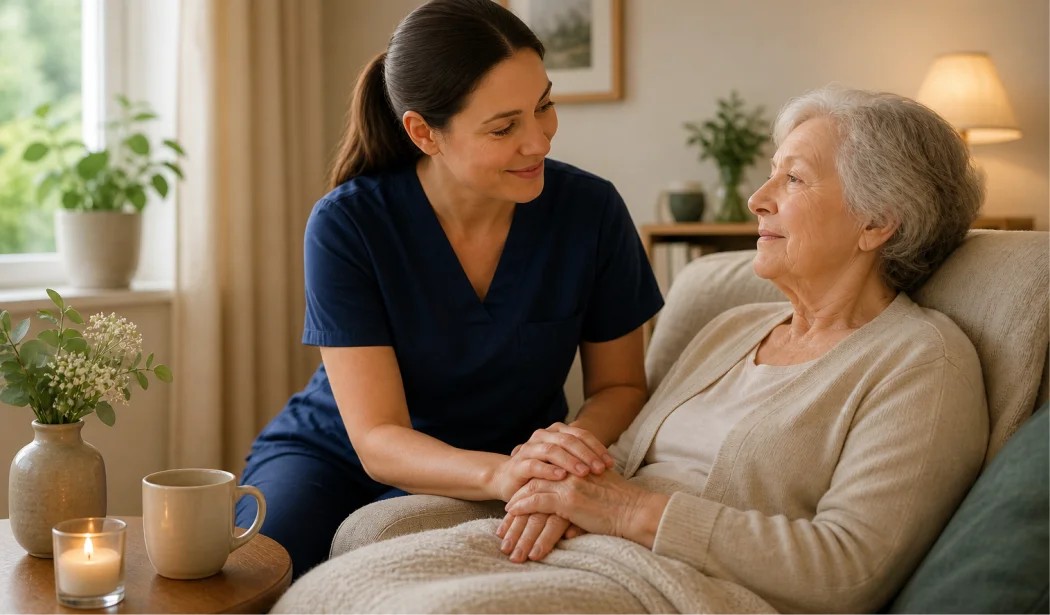
Palliative Care at Home: What It Includes, What It Doesn’t, and When to Start
Palliative care is often misunderstood. Many families only hear about it during difficult moments, which can make it feel overwhelming or final. In reality, palliative care is not about giving up. It is about providing comfort, dignity, and support when it matters most.
At home, palliative care allows individuals to remain in familiar surroundings, supported by people they trust. It focuses on quality of life — not just for the person receiving care, but for the family as well.
What Palliative Care at Home Includes
Palliative care is centred around comfort and support. It is tailored to the individual and can begin at different stages of illness, depending on what is needed.
At home, this care may include:
- Managing pain and physical discomfort
- Supporting daily routines and personal care
- Assisting with mobility and positioning for comfort
- Monitoring symptoms and changes in wellbeing
- Providing emotional reassurance and calm presence
Care is gentle, responsive, and focused on making each day feel as comfortable and manageable as possible.
Emotional and Family Support
Palliative care extends beyond physical needs. It recognises that both the individual and their family may be navigating emotional changes.
Support may include:
- Providing a calm and reassuring presence
- Helping families feel less alone in decision-making
- Offering consistency during uncertain times
- Creating space for meaningful moments together
Often, the greatest comfort comes from knowing that support is steady and available.
What Palliative Care Does Not Include
Understanding what palliative care is not can help ease concerns.
Palliative care:
- Does not mean stopping all treatment
- Does not mean immediate end-of-life care
- Does not replace family involvement
- Does not take away independence unnecessarily
Instead, it works alongside medical care where needed and supports the individual in a way that respects their wishes and pace.
When to Consider Palliative Care at Home
There is no single moment when palliative care must begin. It is often most helpful when introduced earlier than expected — not as a last step, but as part of a thoughtful care plan.
Families may begin to consider it when:
- Managing symptoms becomes more complex
- Daily routines require more support
- Comfort becomes a priority over recovery
- Caring alone begins to feel overwhelming
Starting earlier allows everyone to adjust gently, without urgency or pressure.
The Value of Being at Home
For many individuals, home is where they feel most at ease. Familiar surroundings, personal routines, and the presence of loved ones can bring a sense of calm that is difficult to replicate elsewhere.
Palliative care at home supports this environment. It allows care to be delivered in a way that feels personal, respectful, and aligned with the individual’s wishes.
A Calm and Supported Approach to Care
Palliative care is not about changing everything. It is about adjusting care to meet a person where they are, with compassion and understanding.
It allows families to focus on being present, while knowing that comfort and support are being carefully managed.
If You’re Considering Palliative Care at Home
If you are thinking about palliative care for a loved one and would like guidance on what it could look like at home, our team is here to support you — calmly and without pressure.
📞 Call: 079 316 5425
✉️ Email: lynn@erhomecare.co.za
🌐 Enquire online: www.erhomecare.co.za