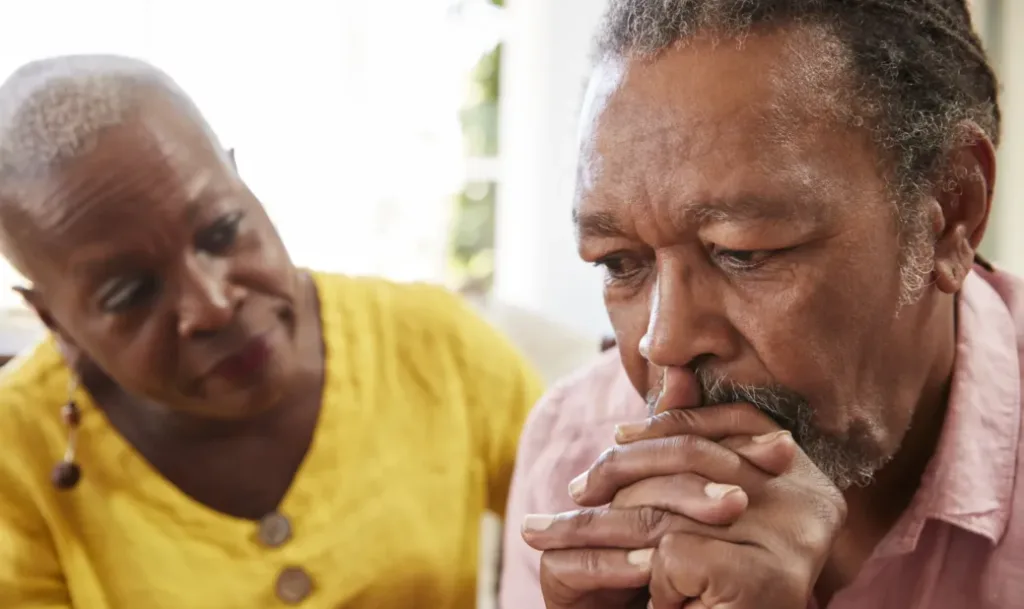
Happiness and contentment are important to a quality, purposeful life. What makes people feel happy and content is different for each person and often changes over time. One of the most important aspects of a caregiver’s job is to help seniors find and maintain happiness so that they will find contentment in the later stage of life. It is impossible to make someone feel happy and content, but caregivers and family can support an environment that helps a person find this themselves.
Family members provide a special love. In general, caregivers must support the happiness and contentment of seniors more frequently than anyone else.
Elderly persons are prone to depression for reasons such as loneliness, loss of friends and loved ones, changes in environment or living arrangements, or physical and mental decline. However, not every senior experiences depression. A caregiver should try to understand a senior’s mood based on the past life they had led and changes they may be experiencing currently. If a caregiver senses that a person is experiencing depression (which can be brought about with physical changes, memory changes or loss of energy and motivation), it is important to discuss these observations with a physician. Treatment of depression has advanced significantly recently, and it can add significantly to quality of life.
When you feel that a person may be depressed, you should realize that you cannot make a person be happy. You may use suggestions to direct a senior to a happier state. Trying too hard to make a depressed person feel happy may work against you because it may also lead to your own burnout and depression. A caregiver should protect his or her emotional well-being while caring for a person in a depressed state. This can be difficult because the caregiver provides personal care. Do not take the senior’s unhappiness personally. There is only so much a caregiver can do.
Depression is sometimes mistaken for sadness, which is temporary and can be treated by redirection and making daily adjustments. Depression is a more permanent change in chemical balance and is more challenging to overcome because it can be more serious. It should first be addressed and treated by a physician. When in doubt, assistance from a professional should be sought. A caregiver should contact the senior’s primary care physician, who can evaluate the senior and refer a specialist, if needed.
Depression can be serious and cause life-threatening conditions. A caregiver should notify family members or a doctor if depression does not subside and document care plans daily to note mood changes. These notes help navigate what works for the senior and what does not work.
Depression and dementia often go hand in hand. Depression can cause dementia-like symptoms and dementia (or memory loss) can cause feelings of depression in a person. These two conditions share many signs and can be difficult to tell apart. As someone ages, the person’s body and mind change. The person may start thinking more slowly or make mistakes. Or, the senior may just seem “different” to those who know him or her well. While these things may be easily attributed to dementia, the elderly person may be suffering from depression instead. How will you know which one is causing the suffering? The best way is to differentiate the signs and symptoms of each illness. That can help point to the appropriate treatment.