
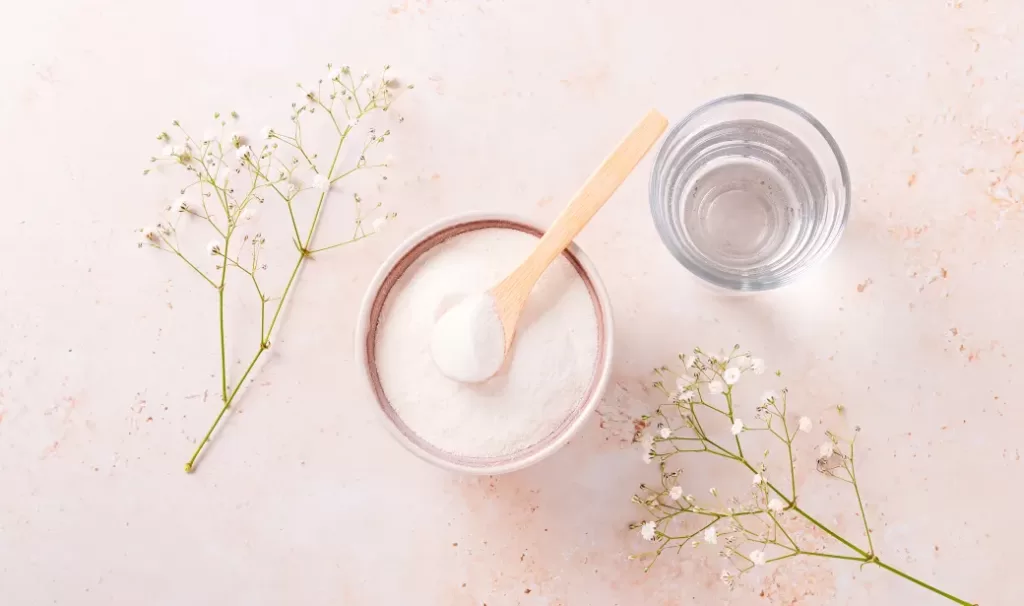
Collagen accounts for 30% of your body’s protein. It provides structure, support, or strength to your skin, muscles, bones, and connective tissues. Unfortunately, scientific research is lacking for most collagen supplements, but a well-balanced diet gives your body the raw ingredients it needs to help it make collagen naturally.
What Is Collagen?
Collagen is the primary building block of your body’s skin, muscles, bones, tendons, ligaments, and other connective tissues. It’s also found in your organs, blood vessels, and intestinal lining.
Proteins are made from amino acids. The primary amino acids that make collagen are proline, glycine, and hydroxyproline. These amino acids form protein fibrils in a triple helix structure. To make the triple helix, your body needs the proper amount of vitamin C, zinc, copper, and manganese.
What Does Collagen Do?
Collagen’s primary role is to provide structure, strength, and support throughout your body.
Collagen’s specific roles include:
- Helping fibroblasts form in your dermis (middle skin layer) helps new cells grow.
- Playing a role in replacing dead skin cells.
- Providing a protective covering for organs.
- Giving structure, strength, and elasticity to your skin.
- Helping your blood to clot.
Are There Different Types Of Collagen?
Some 28 types of collagen types have been identified. They differ by how the molecules are assembled, the added cell components, and where the collagen is used in your body. All collagen fibrils have at least one triple helix structure.
The leading five types of collagen and what they do are:
- Type I. This type makes up 90% of your body’s collagen. Type I is densely packed and used to structure your skin, bones, tendons, and ligaments.
- Type II. This type is found in elastic cartilage, which provides joint support.
- Type III. This type is found in muscles, arteries, and organs.
- Type IV. This type is located in the layers of your skin.
- Type V. This type is located in the cornea of your eyes, some layers of skin, hair, and tissue of the placenta.
What Happens To Collagen As I Get Older?
Your body produces less collagen as you age, and existing collagen breaks down faster. The collagen is also lower in quality than when you were younger. Women experience a significant reduction in collagen production after menopause. It’s normal for everyone to experience a decline in collagen production after age 60.
Written by: Optimum Gold