Home Safety Assessment: A Room-by-Room Checklist to Reduce Falls and Injury
Home is usually the place where an older loved one feels most comfortable and independent.
But a familiar home can gradually become more difficult to navigate as mobility, balance, eyesight or strength changes.
A loose rug that has been in the passage for years may suddenly become a trip hazard. Getting in and out of the bath may become more difficult. A dark hallway may be harder to navigate at night. Even getting out of a favourite chair can become challenging.
The answer is not necessarily to completely change the home.
Often, a practical room-by-room safety check can identify small changes that make everyday life safer and easier.
Why Home Safety Becomes More Important With Age
Falls are not simply an unavoidable part of getting older.
The World Health Organization identifies a number of environmental factors that can contribute to falls among older people, including trip hazards, slippery or uneven flooring, poor lighting, clutter and a lack of handrails. World Health Organization
Health, mobility, vision and medication can also influence an individual’s fall risk. This means fall prevention should look at both the person and the environment rather than relying on one solution. WHO | Regional Office for Africa
For families, one of the simplest places to begin is with the home itself.
Walk through each room and consider it from the perspective of someone who may be less steady, slower on their feet or using a walking aid.
Entrance and Hallways: Create a Clear Route
Start at the entrance to the home.
Ask yourself whether your loved one can move from the front door to the rooms they use most often without having to navigate unnecessary obstacles.
Check for:
- Loose mats or rugs
- Electrical or extension cords across walkways
- Clutter, boxes or small furniture
- Uneven flooring
- Poorly lit passages
- Difficult steps or changes in floor level
- Furniture that narrows the walking route
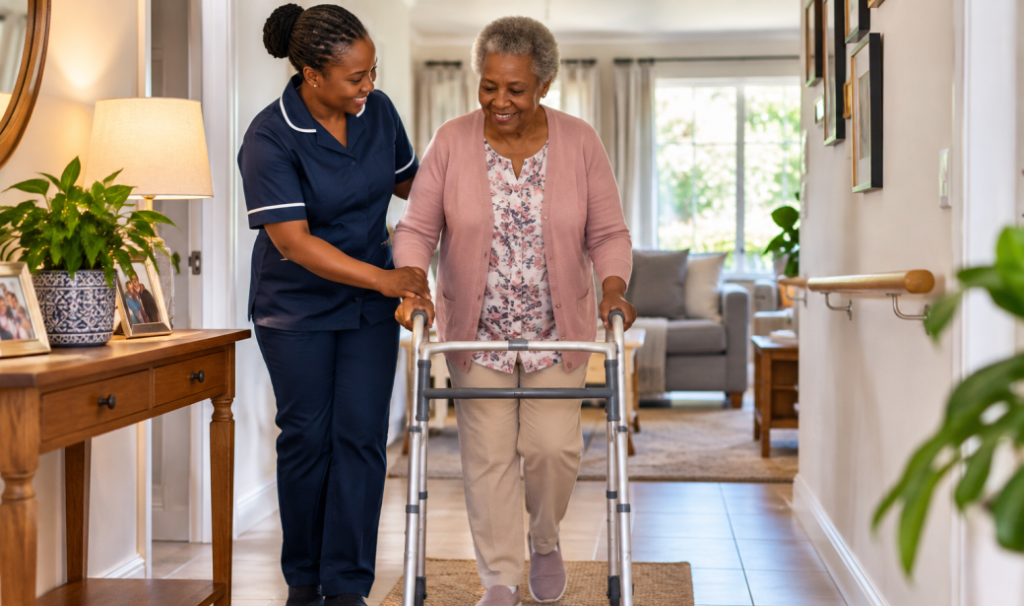
If your loved one uses a walking frame, cane or another mobility aid, there should be enough space to use it properly.
Avoid creating an obstacle course around furniture simply because “it has always been there.”
The home needs to work for the person living in it now.
Living Room: Look at How the Space Is Actually Used
The living room is often where someone spends a large part of the day.
Look beyond obvious hazards and consider everyday movements.
Can your loved one get in and out of their usual chair comfortably?
Can they reach the phone, remote control, water and other frequently used items without stretching or standing unnecessarily?
Is there a clear route between the chair and the bathroom?
Living Room Safety Checklist
Check that:
- Walkways are clear
- Rugs cannot easily slip or bunch
- Electrical cords are out of walking routes
- Frequently used items are within comfortable reach
- Chairs are stable
- Lighting is adequate
- Furniture does not obstruct mobility aids
- Pets’ beds, bowls and toys do not create avoidable trip hazards
Small changes can make a significant difference without making the room feel clinical.
Bedroom: Think About Both Day and Night
Bedroom safety is particularly important because getting up during the night can combine several risk factors at once.
The person may be sleepy, the room may be dark, and they may need to move quickly to reach the bathroom.
Start with the route from the bed to the door.
Bedroom Safety Checklist
Look for:
- A clear route from the bed to the bathroom
- Adequate lighting that is easy to switch on
- Loose rugs or objects beside the bed
- Electrical cords across the floor
- Clothing, shoes or bedding that could become a trip hazard
- A bed height that makes getting in and out manageable
- Frequently used items that require unnecessary stretching or bending
A bedside light should be easy to reach.
For someone who requires assistance when getting out of bed, the priority is making sure that support is available according to their individual needs rather than encouraging them to move independently when it is no longer safe.
Bathroom: Give This Room Extra Attention
Bathrooms deserve particular attention during a home safety assessment.
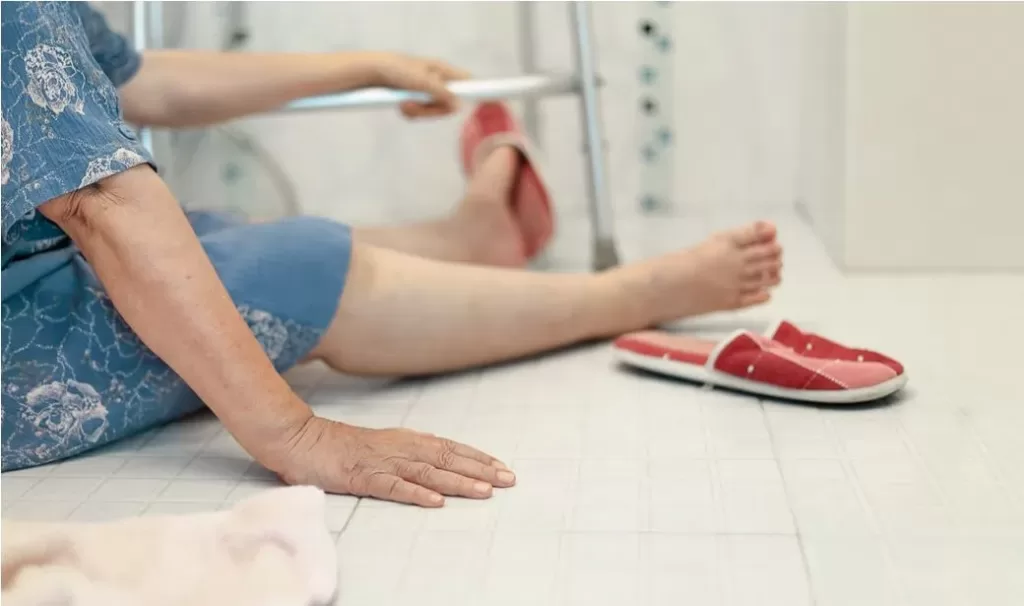
Water, smooth surfaces, restricted spaces and movements such as sitting, standing and stepping into a shower can create additional challenges for someone with reduced mobility or balance.
WHO identifies bathrooms as one of the areas associated with a high risk of injury from falls among older people living independently. World Health Organization
Bathroom Safety Checklist
Consider:
- Is the floor slippery when wet?
- Can the person get into and out of the shower or bath safely?
- Can they sit down and stand up from the toilet safely?
- Is there adequate lighting?
- Are toiletries within easy reach?
- Are towels positioned where they can be reached without stretching?
- Does the person need assistance with bathing or toileting?
- Have appropriate grab rails or other professionally recommended aids been installed where needed?
Do not assume that an ordinary towel rail can safely support someone’s body weight.
If adaptations such as grab rails, shower seating or mobility equipment are required, appropriate equipment should be selected and correctly installed.
For some people, the safest option is having another person available to assist with bathing, toileting and personal care.
Kitchen: Reduce Reaching, Climbing and Carrying
The kitchen introduces a different set of risks.
Someone may need to carry hot food or drinks while walking, bend down to low cupboards, stretch to high shelves or move around while concentrating on preparing a meal.
Review where frequently used items are stored.
Everyday plates, cups, food and cooking equipment should ideally be accessible without unnecessary climbing or stretching.
Kitchen Safety Checklist
Check whether:
- Frequently used items are easy to reach
- Floors are kept dry and clear
- There are loose mats
- Electrical cords create obstacles
- Heavy items are stored at manageable heights
- The person can prepare food safely
- There is somewhere stable to sit if standing for long periods is difficult
If meal preparation has become unsafe or exhausting, practical home care support may help maintain independence without requiring the person to stop participating completely.
Stairs and Steps: Don’t Ignore Familiar Risks
Someone may have used the same staircase thousands of times.
That familiarity does not remove the risk if their mobility has changed.
WHO specifically identifies stairs as an area where falls among older people can carry a high risk of injury. World Health Organization
Check:
- Handrails
- Lighting
- Loose floor coverings
- Objects left on stairs
- Visibility of individual steps
- Whether the person can safely manage the stairs at all
If using stairs has become difficult, seek appropriate professional advice rather than improvising unsafe solutions.
Outside Areas: Continue the Assessment Beyond the Front Door
Home safety does not stop inside.
Check the route to the gate, garden, washing line, driveway or any other outside areas your loved one regularly uses.
Look for:
- Uneven paving
- Loose stones
- Slippery surfaces
- Steps
- Poor lighting
- Garden hoses
- Tools or other obstacles
- Wet or moss-covered surfaces
Consider what happens during rain or after dark as well as under ideal daytime conditions.
Night-Time Safety Deserves Its Own Check
A home that works perfectly during the day may feel very different at 2 a.m.
Walk the route from the bedroom to the bathroom at night.
Is it easy to see?
Are there obstacles?
Can the person safely get out of bed?
Can they reach the bathroom independently?
Would they know how to call for assistance if they needed it?
For someone who is unsteady, recovering from surgery or needing regular assistance overnight, the family may need to consider whether night care at home would provide a safer arrangement.
After Surgery or Hospital Discharge, Reassess the Home
Home safety should also be reviewed when someone’s physical abilities change suddenly.
After surgery, illness or a hospital stay, a person may return home with reduced strength, pain, movement restrictions or a temporary need for a walking aid.
A home that was perfectly manageable before hospital admission may therefore need temporary changes.
Keep frequently used items close by, maintain clear walking routes and follow any mobility instructions provided by the person’s healthcare team.
As recovery progresses, those needs may change again.
Mobility Aids Need Space to Work
A walking frame or cane is only useful if the home allows it to be used properly.
Narrow gaps between furniture, cluttered passages and small bathroom spaces can make mobility aids difficult to use.
Do not modify or prescribe mobility equipment without appropriate professional advice.
Where an occupational therapist, physiotherapist or another qualified healthcare professional has recommended equipment or adaptations, families should follow that guidance.
WHO includes appropriate assistive devices, home assessment and environmental modification among measures that can form part of fall-prevention strategies for older people at risk. WHO | Regional Office for Africa
Personal Care Can Also Affect Safety
Bathing and toileting are not the only daily activities where someone may lose their balance.
Getting dressed while standing, bending to put on shoes, moving between a bed and chair or trying to carry items while walking can all become more difficult when mobility changes.
A caregiver can provide practical assistance with everyday routines while allowing the person to remain involved wherever it is safe for them to do so.
The objective should be supporting independence safely, not unnecessarily taking independence away.
What If Your Loved One Has Already Fallen?
A previous fall should not simply be dismissed as an accident.
It is worth considering what contributed to the fall and whether anything in the person’s environment or circumstances needs to change.
ER Home Care has an existing guide explaining what to do if an elderly person falls.
A healthcare professional should assess concerns about repeated falls, dizziness, balance, medication, vision, sudden changes in mobility or other medical factors that may contribute to fall risk.
A home safety checklist can address environmental hazards, but it cannot diagnose the reason someone is falling.
A Safer Home Doesn’t Need to Feel Like a Care Facility
One concern families sometimes have is that safety changes will make a loved one’s home feel institutional.
They do not have to.
The goal is to preserve what makes the home familiar and comfortable while removing unnecessary obstacles and making everyday routines easier to manage.
That might be as simple as moving a rug, changing the position of a chair, improving lighting or reorganising frequently used items.
For someone with greater mobility or personal-care needs, it may mean adding appropriate equipment or introducing additional support.
When Additional Home Care May Help
Sometimes the home itself is not the only issue.
A person may need another set of hands.
They may require assistance getting out of bed, bathing and dressing, preparing meals, moving safely around the home or managing their evening routine.
ER Home Care provides personalised in-home care for elderly, convalescing, palliative and post-operative clients, with services ranging from five-hour care to long-term live-in caregivers. ER Home Care
Home care can support the person’s everyday routine while helping families maintain a safer and more manageable environment.
ER Home Care supports families in Gauteng, with services also available in Mpumalanga. ER Home Care
If your loved one’s home no longer feels as safe or manageable as it once did, contact ER Home Care to discuss their individual home-care requirements.