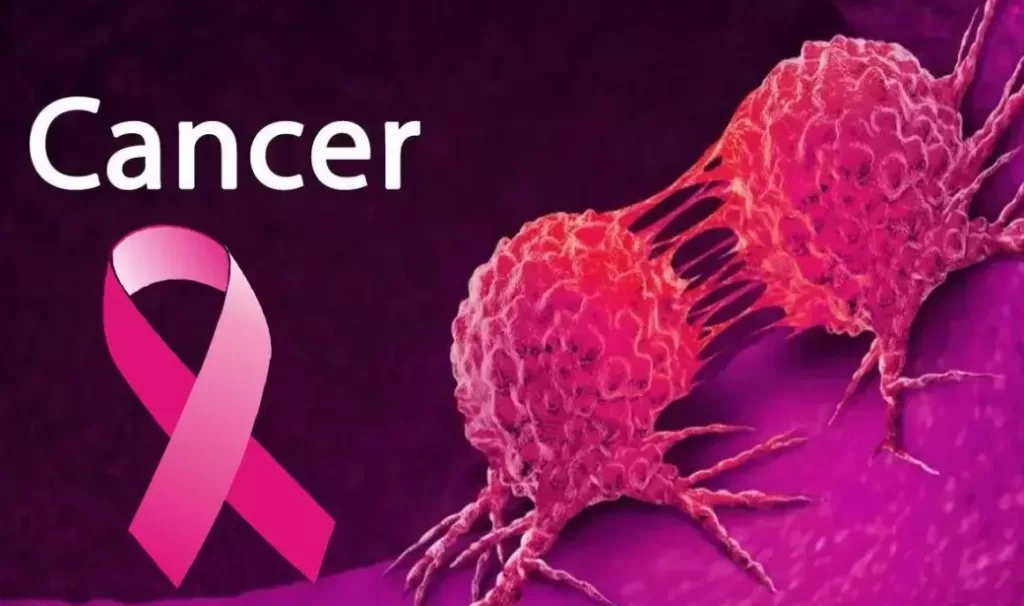
Cancer is a disease in which some of the body’s cells grow uncontrollably and spread to other body parts.
Cancer can start almost anywhere in the human body, which is made up of trillions of cells. Normally, human cells grow and multiply (through cell division) to form new cells as the body needs them. When cells grow old or become damaged, they die, and new cells take their place.
Sometimes this orderly process breaks down, and abnormal or damaged cells grow and multiply when they shouldn’t. These cells may form tumours, which are lumps of tissue. Tumours can be cancerous or not cancerous (benign).
Cancerous tumours spread into, or invade, nearby tissues and can travel to distant places in the body to form new tumours (a process called metastasis). Cancerous tumours may also be called malignant tumours. Many cancers form solid tumours, but cancers of the blood, such as leukaemias, generally do not.
Benign tumours do not spread into, or invade, nearby tissues. When removed, benign tumours usually don’t grow back, whereas cancerous tumours sometimes do. Benign tumours can sometimes be quite large, however. Some can cause serious symptoms or be life-threatening, such as benign tumours in the brain.
Discover our in-house nursing services today. Explore more about us or visit our shop now.