Patience
People who need care often take longer to complete simple tasks. They may ask the same questions over and over. Good caregivers need patience to deal with anything from a client’s memory lapses to angry outbursts. They practice staying calm and avoiding frustration.
Compassion
Empathy and understanding are absolutely necessary. Even when caring for an abusive person, caregivers try to remain empathetic and understanding.
Humor
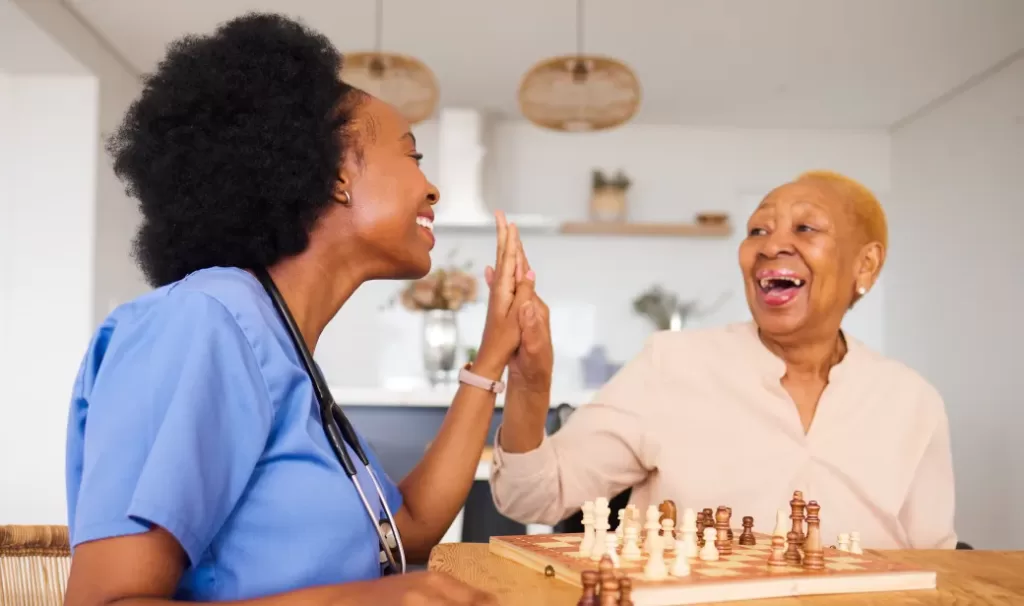
Finding something to laugh about can make a tough situation bearable. A sense of humor keeps a caregiver emotionally strong and is a great stress buster.
Being Present
Good caregivers know the importance of respecting their loved one’s current abilities. Rather than focusing on what their client can no longer do, a good caregiver tries being in the moment with them — looking at photos, listening to music, cooking a favorite meal, remembering that they weren’t always sick.
Detail Oriented
Good caregivers are good managers. They create schedules, plan for emergencies, and organize information so they don’t have to run around at the last minute.
Cooperative
A good caregiver is part of a care team that may include doctors, family and friends. Being understanding and flexible goes a long way towards being a cuccessful team player.
Assertive
Good caregivers advocate for their clients. They ask questions and expect answers. Good caregivers learn about their client’s condition, and they make sure their client gets the care they need.
Discover our in-house nursing services today. Explore more about us or visit our shop now.